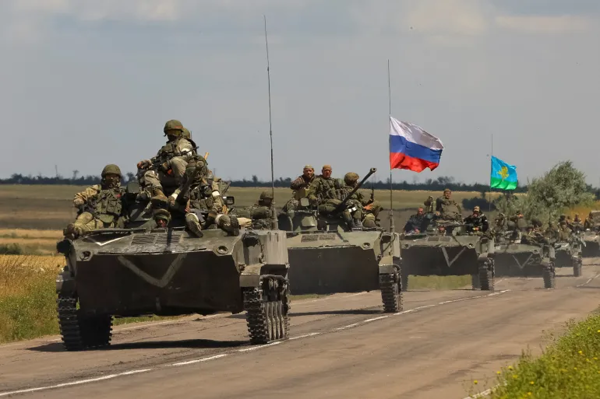
This autumn, for the first time, Russia has taken the lead: it outnumbers Ukrainian drones in key sectors of the front and applies more effective tactics.
“The very concept of a safe rear is disappearing,” warned Valeriy Zaluzhniy, former head of the Ukrainian military and current ambassador to the United Kingdom.
Although Russia has not yet achieved a decisive operational breakthrough, swarms of cheap drones prevent large-scale maneuvers and severely wear down Ukrainian logistics.
In Pokrovsk, Russian drones outnumber Ukrainian ones by up to 10 to 1. Ukraine is trying to regain the advantage, but it lacks sufficient fiber optic cable—which Russia receives in large quantities from China—and resources to attack Russian logistics.
This shift in the tactical balance also weakens Kyiv's diplomatic position.
For most of the war, Ukraine maintained a clear drone advantage due to its innovation and speed of adaptation.
Russia's growing power to strike Ukrainian logistics lines with drones is the most significant military change of 2025, according to soldiers and analysts. Russia created an elite unit, Rubicon, which recruited the best drone pilots and used fiber optic drones—impossible to jam—to attack Ukrainian logistics, forcing a bloody retreat. Rubicon then expanded to the eastern front and trained other Russian units.
Those areas were once considered safe. Today, any movement can be targeted. If Kyiv does not regain the initiative, its already understaffed army could enter a phase of exhaustion.
The War in Ukraine: Russia Gains the Lead with Tactical Drones
Four Ukrainian soldiers were traveling along a supply road more than 30 kilometers behind the front line when a Russian drone exploded behind them, lifting the rear of their Nissan Pathfinder into the air. Captain Stanislav Derkach was thrown against the dashboard, dislocating his kneecap.
“We were very lucky,” Derkach said from the hospital. He and the other soldiers ran into the woods and watched as a second Molniya drone destroyed the vehicle.
Three powerful businessmen—two Americans and one Russian—were hunched over a laptop in Miami Beach, apparently drafting a plan aimed at ending the long and deadly war between Russia and Ukraine. But the true scope of their project went much further, according to people familiar with the conversations.
In his seaside mansion, real estate mogul turned special envoy Steve Witkoff was receiving Kirill Dmitriev, head of Russia's sovereign wealth fund and a negotiator designated by Vladimir Putin, who had drafted most of the document they were reviewing on screen.
In private, they were charting a path to reintegrate Russia's $2 trillion economy into the global system, with U.S. companies first in line to get a jump on European competitors in the profits.
Dmitriev was pushing a plan for U.S. companies to gain access to about $300 billion in assets of Russia's central bank frozen in Europe, to be used for joint investment projects between the U.S. and Russia, as well as for the reconstruction of Ukraine under U.S. leadership.
“There were no limits to what two historical adversaries could achieve,” Dmitriev said, proposing to bring the U.S. and Europe together. “Imagine companies from both countries jointly exploiting the vast mineral resources of the Arctic. Even our space industries, rivals during the Cold War, could undertake a joint mission to Mars with Elon Musk's SpaceX.”
For the Kremlin, the talks in Miami represented the culmination of a strategy designed before Trump took office: to bypass traditional U.S. national security channels. By offering multi-billion dollar deals in energy and rare earths, Moscow sought to redraw the map of Europe in its favor while dividing the U.S. and Europe, lamented a Ukrainian official.