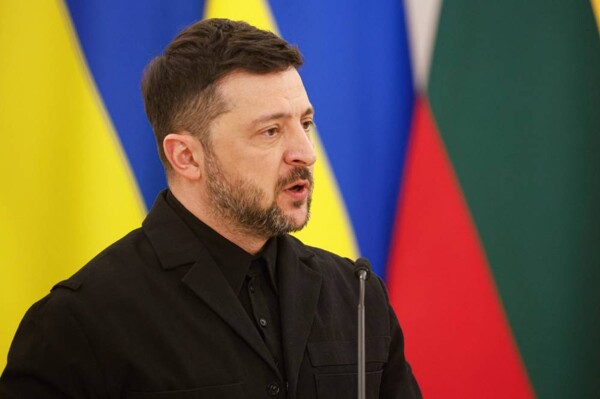
The proposal for demilitarized zones is technically complex, as much depends on the details. According to a leaked plan from the Trump administration, the last part of the industrial belt in the 'Donetsk' region will be turned into a demilitarized zone, the Ukrainian army will be withdrawn from it, and it will be internationally recognized as part of Russia. However, Ukraine sees this as an unfair demand, as no one has asked Russia to withdraw its troops. Ukrainian President Volodymyr Zelensky said on December 14: 'If Ukrainian troops withdraw five or ten kilometers, why doesn't Russia withdraw a similar distance?' According to Politico, it is likely that the idea to turn the region into a free economic zone was a Ukrainian proposal based on European advice. While a demilitarized zone could allow Russia to annex the territory later, a free economic zone would theoretically allow Ukraine to continue to own investments and industries in the region. The goal may also be to attract President Trump by offering profitable incentives to American companies. However, Zelensky stated that the free economic zone is an American proposal. 'The Americans are looking for some formula, they discussed the issue of a 'free economic zone', the Americans call it that, while the Russians call it a 'demilitarized zone,' Zelensky said. He also questioned whether Russia could ever be trusted to abide by the rules, and what would stop Russians from disguising themselves as civilians and seizing this free economic zone. In fact, there are few historical agreements that could serve as a model for a possible buffer zone in Donbas. Ukraine might accept the de facto Russian control over the territories it already controls and agree to a buffer zone in the Ukrainian-controlled part of Donbas, provided it retains formal sovereignty over those areas and the territories currently controlled by Russia. However, the Ukrainian government does not believe that formal territorial concessions can lead to a lasting peace, and Zelensky also stated that a referendum is the only way to resolve the issue of territorial concessions. Rafael Lus, a political affairs researcher at the European Council on Foreign Relations, said: 'The Ukrainian position is that the 1991 borders remain the country's borders, but it also realizes it is not in a position to liberate those territories militarily. Therefore, it is willing to accept the de facto control of a foreign force, but without any formal transfer of sovereignty.' Some experts believe that at the current pace, Russia would need much more time, effort, and money to recapture the Ukrainian-controlled part of Donbas, and they oppose the Trump administration's assumption that Ukraine is losing the war and should trade land for peace. 'If the Russians could easily take these territories, why haven't they?' asks Kofman. Neither a demilitarized zone nor a free economic zone can succeed unless both sides are keen to end the conflict and prefer the benefits of peace to continued fighting. At this stage, it is clear that Russia believes it has the upper hand on the battlefield, especially due to Trump's leanings toward Putin. It is also clear that Ukraine and its European allies do not believe Ukraine will gain much real peace by giving up more land. From 'Foreign Policy'.