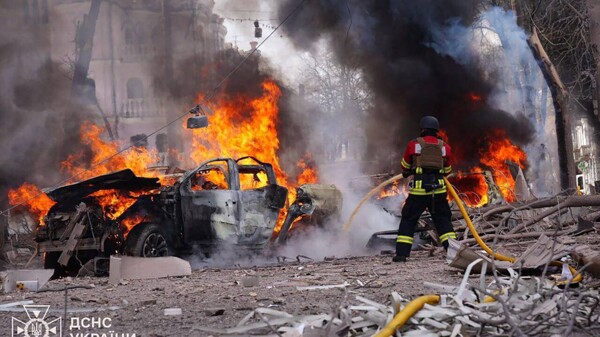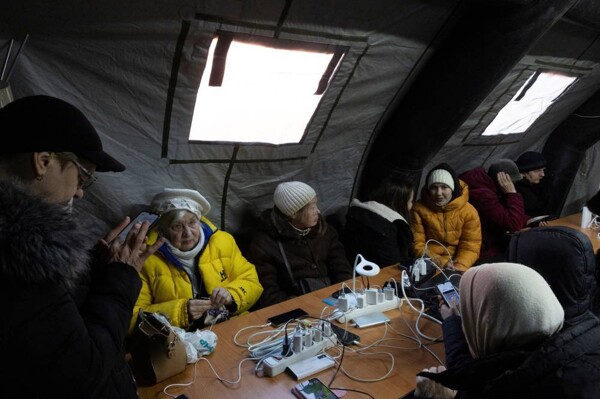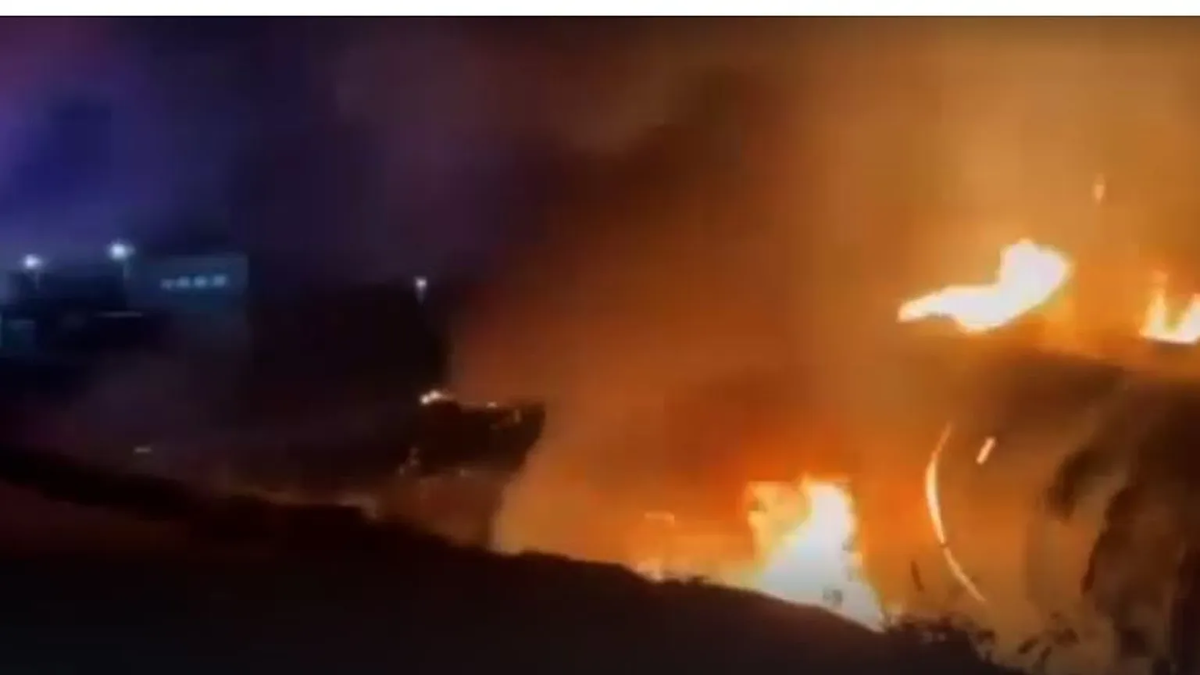
Kyiv, November 9, 2025 – Total News Agency-TNA-Ukraine launched a series of drone and missile attacks on Russian border regions, in direct response to Russian bombardments that have destroyed Ukrainian civilian and energy infrastructure in recent days. Kyiv accuses Moscow of deliberately using “cold as a weapon” for the fourth consecutive winter by destroying civilian infrastructure and leaving millions of people without electricity and water in sub-zero temperatures. Ukrainian Foreign Minister Andrii Sybiha denounced that Friday's Russian attacks damaged facilities supplying the Khmelnytskyi and Rivne nuclear power plants, calling the act “nuclear terrorism”. Taganrog, in the Rostov region, was also partially left in the dark following a fire at a transformer substation. The Ukrainian operations are seen as a proportional retaliation against recent Kremlin bombings of power plants and substations that supply hospitals, heating networks, and schools in several Ukrainian provinces. The offensives reached facilities in Voronezh, Belgorod, and Taganrog, causing mass blackouts and heating cuts affecting over a million people, according to local Russian sources. The attacks, confirmed by Russian regional authorities themselves, show that the war begun by Moscow in 2022 has started to strike hard the invader's own territory. Western spokespeople reminded that the only reason for the conflict remains Russia's invasion of a sovereign country, and that Ukrainian self-defense is protected by international law. On the ground, the Ukrainian offensive represents a symbolic blow: the war that Putin brought to a neighboring territory is now returning fire to the heart of Russia's energy system. The Russian Ministry of Defense admitted that more than forty Ukrainian drones were intercepted overnight, though it avoided detailing the damage in the hardest-hit areas. In Voronezh, a city of over a million people, several drones impacted public utility facilities, causing fires and widespread blackouts. On the borders of Donbas and southern Russia, flames at refineries and power plants are an inverted image of what Moscow has been imposing on Kyiv and other cities for nearly four years. Ukraine also called for an urgent meeting of the Board of Governors of the International Atomic Energy Agency (IAEA) to assess nuclear safety risks in Europe. Kyiv's response, according to analysts, seeks to level the playing field and force Russia to divert defensive resources to its own territory, reducing its offensive capability. The growing use of long-range drones by Ukrainian forces marks a new phase of the conflict: the invading power is beginning to experience firsthand the consequences of attrition imposed by a prolonged war with no significant advances on the front. Despite acknowledging internal damage, the Kremlin insisted on its victimization rhetoric and announced it “will comply with its commitments not to conduct nuclear tests,” attempting to divert international attention from constant violations of humanitarian law. In Belgorod, explosions severely damaged electrical and thermal systems, leaving about twenty thousand homes without supply.